Challenges

Volcanoes

Take on the most spectacular active and dormant volcanoes on the planet.

6 challenges

Ojos del Salado

Ojos del Salado

Country
ARGENTINA / CHILE
Feet
22615
Meters
6893

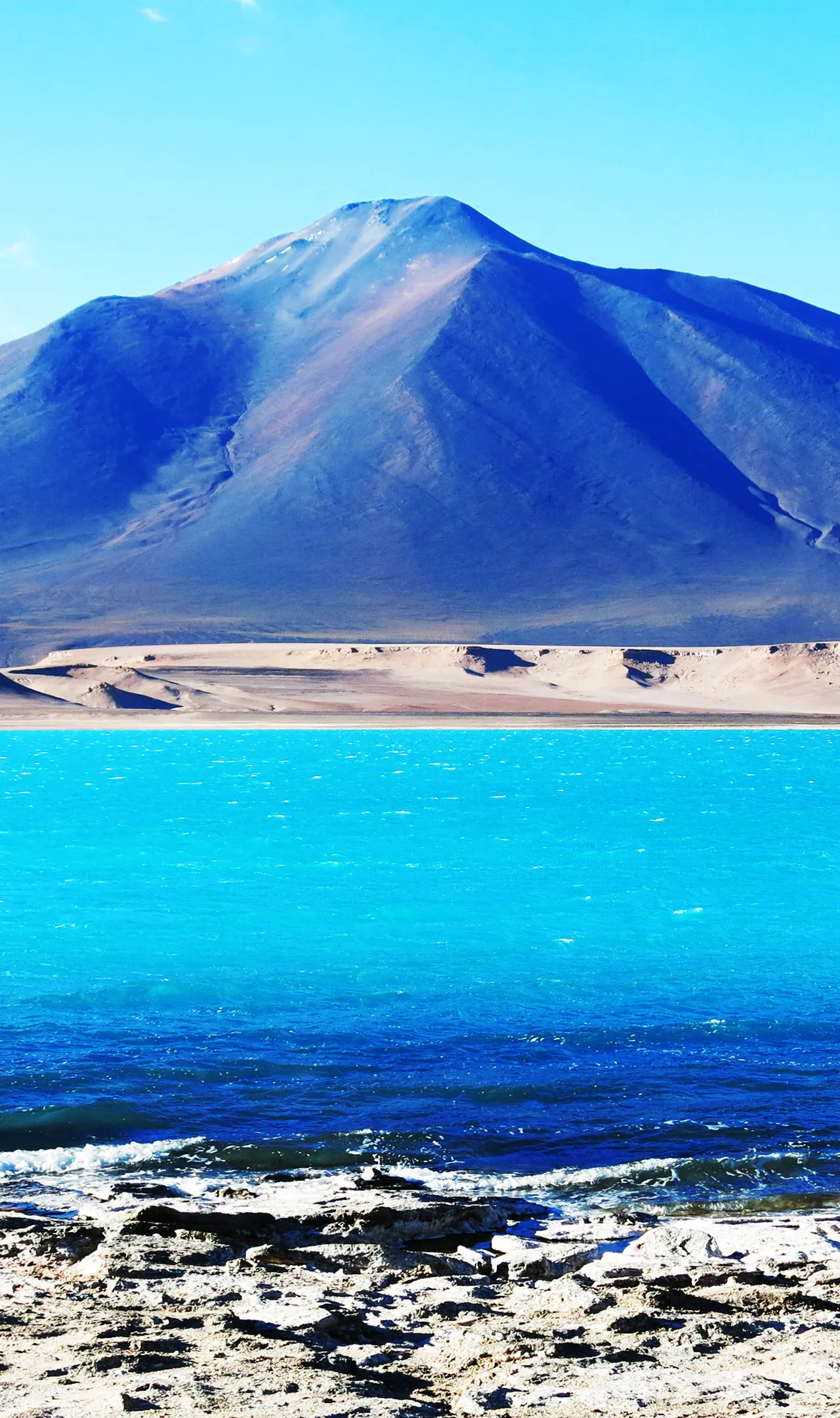
Nevado Ojos del Salado is a stratovolcano in the Andes on the Argentina–Chile border and the highest active volcano in the world at 6,893 m (22,615 ft). It is also the second highest mountain in the Western Hemisphere and Southern Hemisphere and the highest in Chile. Despite the generally dry conditions, there is a permanent crater lake about 100 m (330 ft) in diameter at an elevation of 6,390 m (20,960 ft) on the eastern side of the mountain. This is most likely the highest lake of any kind in the world.

The ascent of Ojos del Salado is mostly a hike except for the final section to the summit which is a difficult scramble that may require ropes. The first ascent was made in 1937 by Jan Alfred Szczepański and Justyn Wojsznis, members of a Polish expedition in the Andes.

Ojos del Salado, straddling the Argentina-Chile border, is not just an imposing peak but a geological wonder. Its status as the world’s highest active volcano makes it a prime target for volcanologists and adventure seekers alike. The volcano’s last known eruption occurred approximately 1,300 years ago, but fumarolic activity suggests that magma still churns beneath its icy summit.
Read more
Mount Sidley

Mount Sidley

Country
ANTARCTICA
Feet
13717
Meters
4181

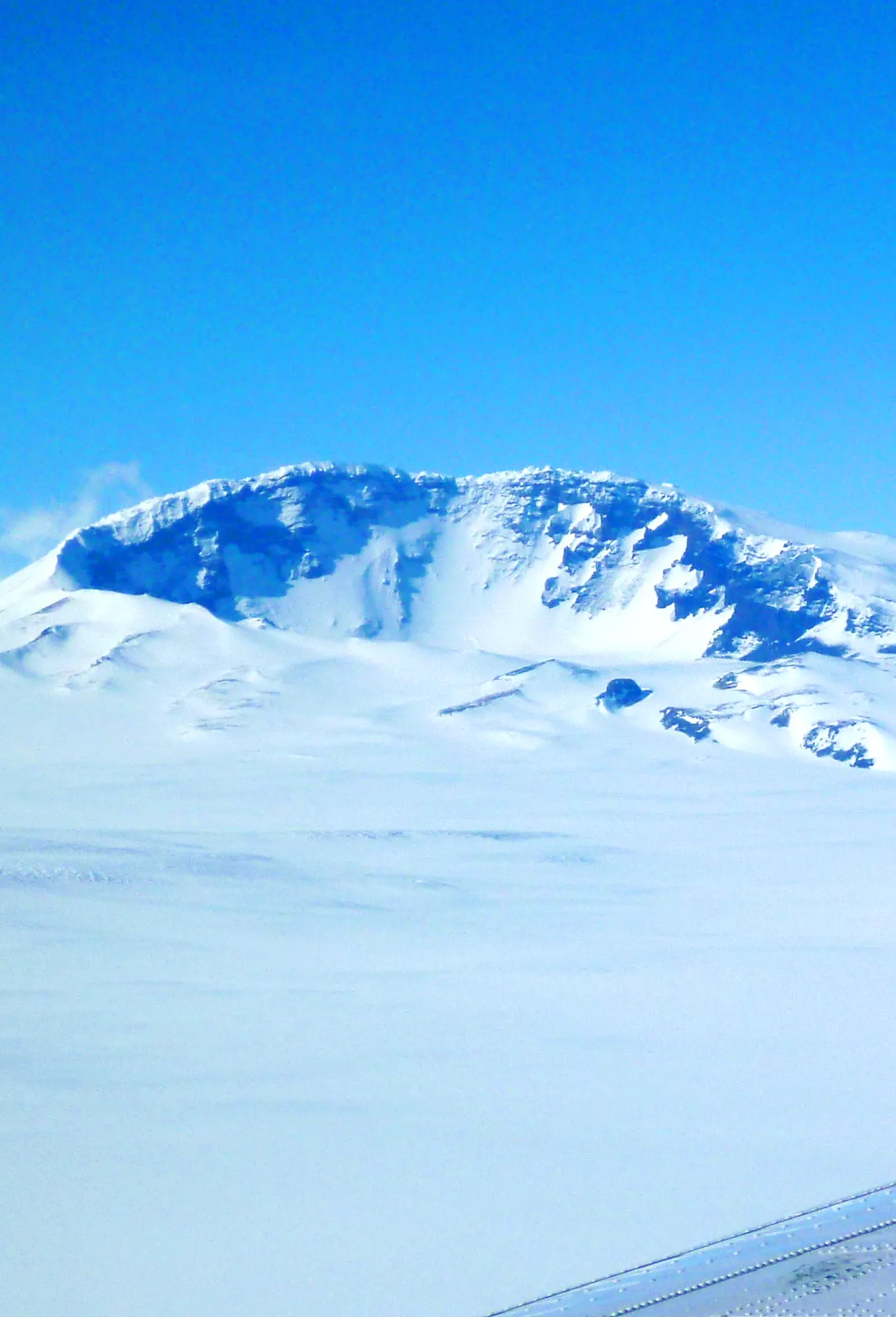
Mount Sidley is the highest dormant volcano in Antarctica, a member of the Volcanic Seven Summits. It is a massive, mainly snow-covered shield volcano which is the highest of the five volcanic mountains that comprise the Executive Committee Range of Marie Byrd Land. The feature is marked by a 5 km wide caldera on the southern side and stands NE of Mount Waesche in the southern part of the range.

The mountain was discovered by Rear Admiral Richard E. Byrd on an airplane flight, November 18, 1934, and named by him for Mabelle E. Sidley, the daughter of William Horlick who was a contributor to the 1933–35 Byrd Antarctic Expedition. The first recorded ascent of Mount Sidley was by New Zealander Bill Atkinson on January 11, 1990.

Nestled in the vast, icy expanse of Marie Byrd Land, Mount Sidley stands as a testament to Antarctica’s volcanic past and present. This colossal shield volcano, while often overshadowed by its more famous counterparts, holds secrets that would make any volcanologist’s heart race.

Read more
Mount Fuji

Mount Fuji

Country
JAPAN
Feet
12389
Meters
3776

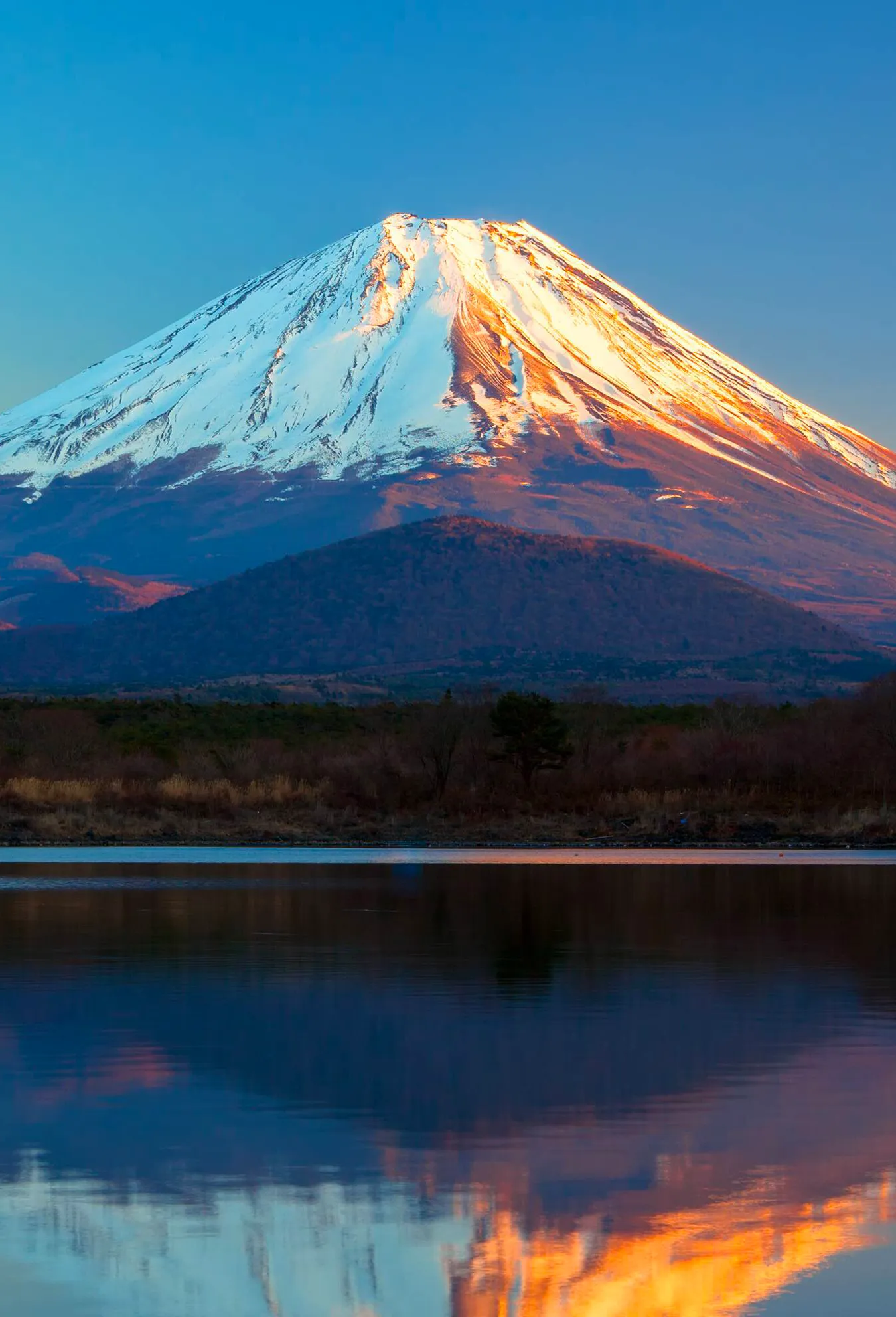
Mount Fuji, located on Honshū, is the highest volcano in Japan at 3776,24 m (12,389 ft), 2nd-highest peak of an island (volcanic) in Asia, and 7th-highest peak of an island in the world. It is a dormant stratovolcano that last erupted in 1707–1708. Mount Fuji lies about 100 kilometers (60 mi) south-west of Tokyo, and can be seen from there on a clear day.

Mount Fuji’s exceptionally symmetrical cone, which is snow-capped for about 5 months a year, is commonly used as a symbol of Japan and it is frequently depicted in art and photographs, as well as visited by sightseers and climbers. It is thought that the first recorded ascent was in 663 by an anonymous monk. The first ascent by a foreigner was by Sir Rutherford Alcock in September 1868.

Mount Fuji, Japan’s iconic stratovolcano, is a geological wonder that has captivated scientists and enthusiasts for centuries. Its near-perfect conical shape is the result of multiple layers of lava and ash accumulated over thousands of years. The volcano sits at the triple junction where the Amurian Plate, the Okhotsk Plate, and the Philippine Sea Plate meet, contributing to its unique formation and activity.

Read more
Mount Etna

Mount Etna

Country
ITALY
Feet
10912
Meters
3326

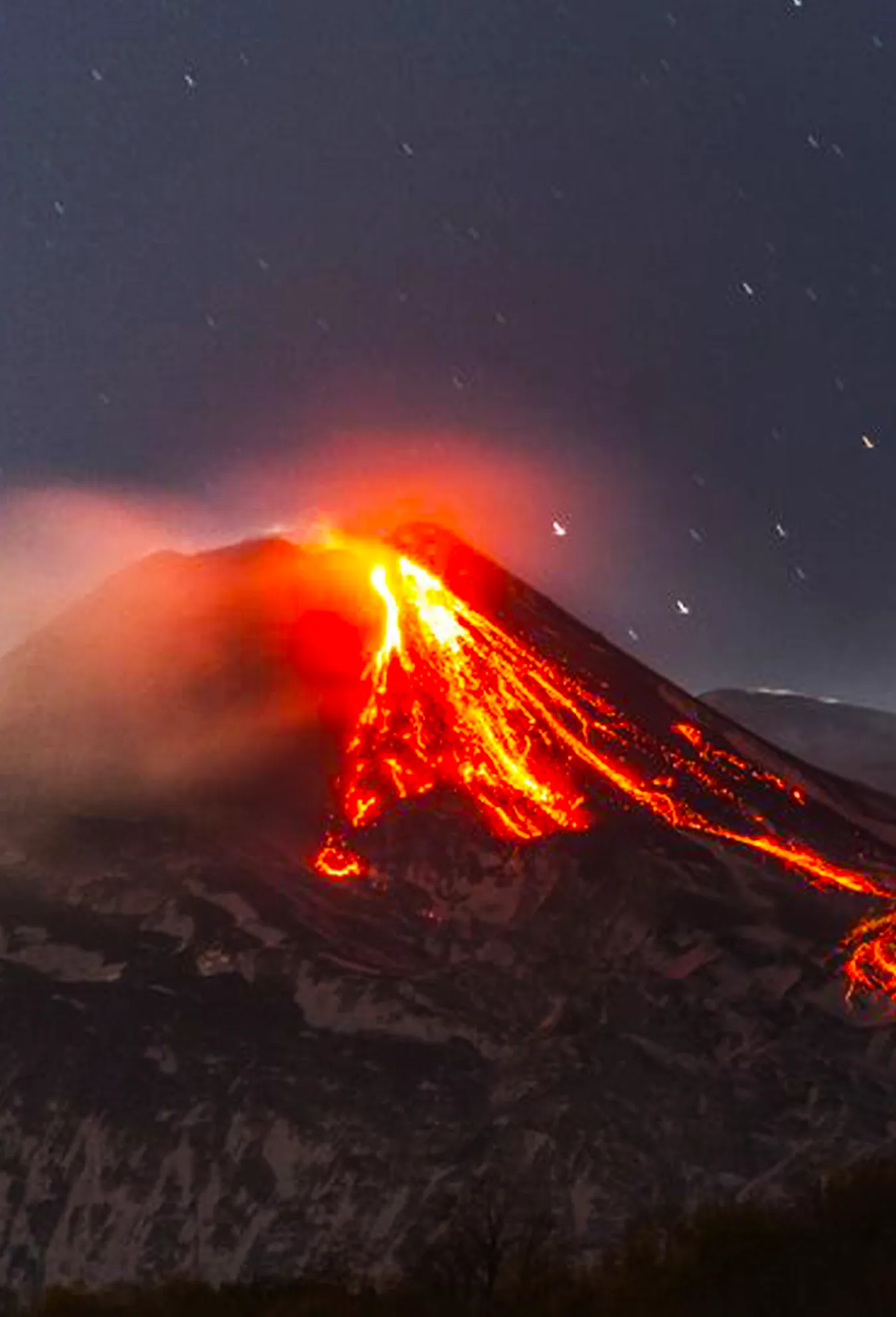
Mount Etna, or Etna, is an active stratovolcano on the east coast of Sicily, Italy. It is the highest active volcano in Europe outside the Caucasus. It is currently 3,326 m (10,912 ft) high, though this varies with summit eruptions. It is the highest peak in Italy south of the Alps. In Greek Mythology, the deadly monster Typhon was trapped under this mountain by Zeus, the god of the sky and thunder and king of gods, and the forges of Hephaestus were said also to be underneath it.

Mount Etna is one of the world’s most active volcanoes and is in an almost constant state of activity. The fertile volcanic soils support extensive agriculture, with vineyards and orchards spread across the lower slopes of the mountain and the broad Plain of Catania to the south. In June 2013, it was added to the list of UNESCO World Heritage Sites.

Mount Etna, Europe’s most active volcano, is a geological wonder that continues to captivate scientists and volcano enthusiasts alike. Its frequent eruptions and unique characteristics make it a prime subject for volcanological studies.

Read more
Mount Vesuvius

Mount Vesuvius

Country
Italy
Feet
4203
Meters
1281

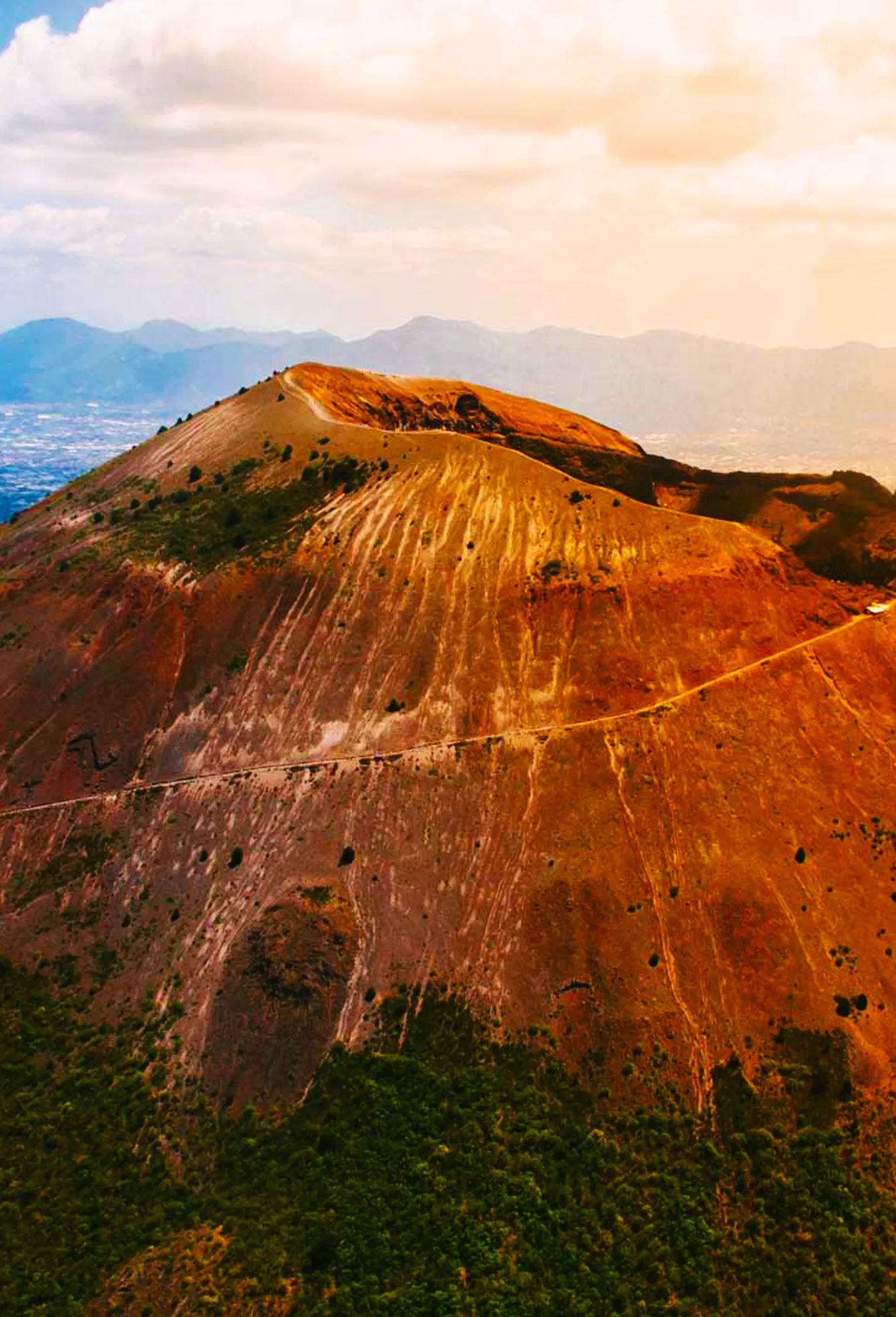
Mount Vesuvius is a somma-stratovolcano located on the Gulf of Naples in Campania, Italy, about 9 km (5.6 mi) east of Naples and a short distance from the shore. It is one of several volcanoes which form the Campanian volcanic arc. Vesuvius consists of a large cone partially encircled by the steep rim of a summit caldera caused by the collapse of an earlier and originally much higher structure.

Mount Vesuvius is best known for its eruption in AD 79 that led to the burying and destruction of the Roman cities of Pompeii, Herculaneum, Oplontis and Stabiae, as well as several other settlements. The eruption ejected a cloud of stones, ashes and volcanic gases to a height of 33 km (21 mi), spewing molten rock and pulverized pumice at the rate of 6×10⁵ cubic metres (7.8×10⁵ cu yd) per second, ultimately releasing a hundred thousand times the thermal energy released by the Hiroshima-Nagasaki bombings. More than 1,000 people died in the eruption, but exact numbers are unknown.

Mount Vesuvius, a complex stratovolcano, boasts a fascinating geological history. Its formation began approximately 25,000 years ago, resulting from the collision of the African and Eurasian tectonic plates. The volcano’s structure consists of a newer cone, Monte Vesuvio, partially encircled by the remnants of an older caldera, Monte Somma. This unique configuration, known as a somma-stratovolcano, provides valuable insights into the volcano’s eruptive past.

Read more
Taal Volcano

Taal Volcano

Country
PHILIPPINES
Feet
1020
Meters
311

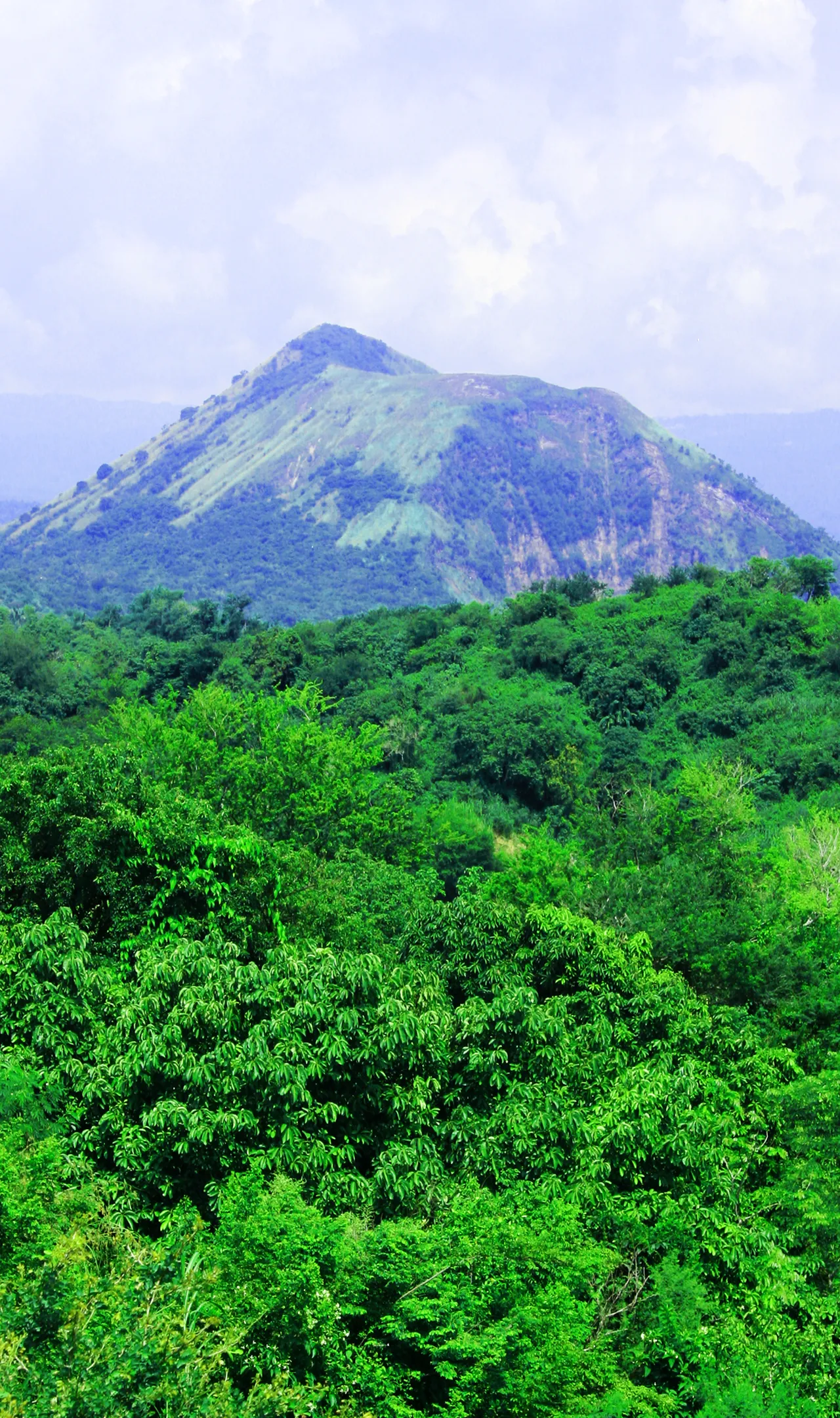
Taal Volcano is a complex volcano located on the island of Luzon in the Philippines. It is the second most active volcano in the Philippines with 33 historical eruptions. All of these eruptions are concentrated on Volcano Island, an island near the middle of Taal Lake. The lake partially fills Taal Caldera, which was formed by prehistoric eruptions between 140,000 and 5,380 BP. Viewed from the Tagaytay Ridge in Cavite, Taal Volcano and Lake presents one of the most picturesque and attractive views in the Philippines.

It is located about 50 kilometres (31 miles) south of the capital of the country, the city of Manila. With its highest elevation at only 311 m (1,020 ft), Taal is of the lowest active volcano in the world.

Taal Volcano’s unique geological structure fascinates volcanologists worldwide. It’s one of the few examples of a „complex volcano” – a volcano with more than one feature. The main crater lake on Volcano Island contains its own small island called Vulcan Point, creating a remarkable natural phenomenon: an island within a lake, on an island within a lake, on an island.

Read more